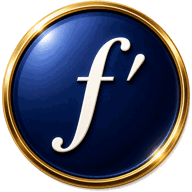
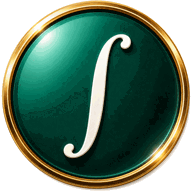
True or false: when and are differentiable functions.
Hint
Look at the Sum rule
Answer
True

Computing derivatives
49 problems · hints, answers and solutions shown beside each one
Do you understand the idea? Usually little or no calculation.
Look at the Sum rule
True
Try an example, like .
False, in general
Simplify
True
Let be a differentiable function. Use at least three different rules to differentiate in different ways, and verify that they all give the same answer.
If you're creative, you can find lots of ways to differentiate!
Constant multiple: .
Product rule: .
Sum rule: .
Quotient rule: .
All rules give .
Practising the skill itself, until applying it is automatic.
Use linearity and the known derivatives of and .
Remember .
You have already seen .
The equation of a line can be determined using a point, and the slope. The derivative of can be found by writing .
, or
A particle moves along the –axis so that its position at time is given by .
At , what is the particle's speed? That is, what is the absolute value of its velocity?
At , in what direction is the particle moving?
At , is the particle's speed increasing or decreasing?
Be careful to distinguish between speed and velocity.
(a) (b) left (c) decreasing
, or
How do you take care of that power?
Further than practice: several ideas at once, or an unfamiliar situation.
Let , for a differentiable function . Give a simplified formula for .
Functions of the form are relatively common. If you remember this formula, you can save yourself some time when you need to differentiate them.
After you differentiate, factor out .
A town is founded in the year 2000. After years, it has had births and deaths. Nobody enters or leaves the town except by birth or death (whoa). Give an expression for the rate the population of the town is growing.
Population growth is rate of change of population.
Interpret it as a derivative that you know how to compute.
A rectangle is growing. At time , it is a square with side length 1 metre. Its width increases at a constant rate of 2 metres per second, and its length increases at a constant rate of 5 metres per second. How fast is its area increasing at time ?
The answer is not 10 square metres per second.
square metres per second.
You don't need to know or .
0
Verify that differentiating using the quotient rule gives the same answer as differentiating using the product rule and the quotient rule, when .
First expression, :
Second expresson, :
and this is exactly what we got from differentiating the first expression.
In order to be differentiable, a function should be continuous. To determine the differentiability of the function at , use the definition of the derivative.
Let . In Question 12, Section 3.5, we learned that .
What is ?
What is ?
Based on your answers above, guess a formula for . Check it by differentiating.
Review Pascal's Triangle.
(a)
(b)
(c)
Do you understand the idea? Usually little or no calculation.
Check signs
In the quotient rule, there is a minus, not a plus. Also, is not the same as .
The correct version is:
Read Lemma 4.1.14 carefully.
False
Practising the skill itself, until applying it is automatic.
Quotient rule
Figure out where the derivative is positive.
Suppose the position of a particle at time is given by . Find the acceleration of the particle () at time .
The acceleration is given by .
Product rule will work nicely here. Alternately, review the result of Question 25.
To find the sign of a product, compare the signs of each factor. The function is always positive.
When is in the interval .
Use factorials, as in Example 3.4.2.
First, factor an out of the derivative. What's left over looks like a quadratic equation, if you take to be your variable, instead of .
First simplify. Don't be confused by the role reversal of and : is just the name of the function , which is a function of the variable . You are to differentiate with respect to .
You don't need to multiply through.
7
You can use the quotient rule.
There are two pieces of the given function that could cause problems.
The derivative of the function is
The derivative is undefined if either or (since the square-root is undefined for and the denominator is zero when . Putting this together — the derivative exists for .
Simplify first
Further than practice: several ideas at once, or an unfamiliar situation.
Let , where , , , and are nonzero constants. What is the smallest integer so that for all ?
Differentiate a few times until you get zero, remembering that , , , and are all constants.
Let .
Show that is differentiable at , and find .
Find the second derivative of . Explicitly state, with justification, the point(s) at which does not exist, if any.
You can re-write this function as a piecewise function, with branches and . To figure out the derivatives at , use the definition of a derivative.
(a) In order to make a little more tractable, let's change the format. Since , then:
Now, we turn to the definition of the derivative to figure out whether exists.
Since looks different to the left and right of 0, in order to evaluate this limit, we look at the corresponding one-sided limits. Note that when approaches 0 from the right, so . By contrast, when approaches 0 from the left, so .
Since both one-sided limits exist and are equal to 0,
and so is differentiable at and .
(b) From (a), and
So,
Then, we know the second derivative of everywhere except at :
So, whenever , exists. To investigate the differentiability of when , again we turn to the definition of a derivative. If
exists, then exists.
Since behaves differently when is greater than or less than zero, we look at the one-sided limits.
Since the one-sided limits do not agree,
So, does not exist. Now we have a complete picture of :
Find an equation of a line that is tangent to both of the curves and (at different points).
Let be the slope of such a tangent line, and let and be the points where the tangent line is tangent to the two curves, respectively. There are three equations fulfils: it has the same slope as the curves at the given points, and it is the slope of the line passing through the points and .
Find all lines that are tangent to both of the curves and . Illustrate your answer with a sketch.
A line has equation , for some constants and . What has to be true for to be tangent to the first curve at the point , and to the second at the point ?
and
Compare this to one of the forms given in the text for the definition of the derivative.
From the UBC Math 100 open textbook project, © Joel Feldman, Andrew Rechnitzer, Elyse Yeager and others. Licensed CC BY-NC-SA 4.0; this HTML adaptation is released under the same licence. Full attribution.